Ekmek

Ekmek

Wolfgang Borchert, “Das Brot” (1946)
Almancadan çeviren: Enes Ekici


Çevirmenin notu

Wolfgang Borchert’in 1946’da kaleme aldığı Das Brot, savaş sonrası Almanya’nın açlık ve utanç atmosferinde geçen, Kurzgeschichte türünün en bilinen örneklerinden biridir. Hikâyenin gücü söylenenden çok söylenmeyende, otuz dokuz yıllık bir evliliğin sessizliğinde, bir dilim ekmeğin etrafında dönen küçük bir yalanın taşıdığı şefkatte yatar. Bu çeviride Borchert’in kısa, tekrar eden, neredeyse nefes nefese cümle yapısını ve “Adam”–“Kadın” adlandırmasındaki mesafeyi Türkçede korumaya çalıştım.

Metin, doktora eğitimim sırasında aldığım bir çeviri dersi kapsamında hazırlanmış; sonrasında yeniden gözden geçirilmiştir.


Kadın aniden uyandı. Saat gece iki buçuktu. Beni ne uyandırdı diye düşündü. Tabii ya! Mutfakta biri sandalyeye çarpmış olmalı. Mutfağı dinledi. Çıt çıkmıyordu. Aşırı sessizdi ve eliyle yanını yokladığında, yanının boş olduğunu anladı. Sessizliğin nedeni de buydu, adamın nefesini duyamamıştı. Ayağa kalktı, karanlık odadan mutfağa el yordamıyla yürüdü. Mutfakta karşılaştılar. Saat iki buçuktu. Beyaz bir şeyin mutfak dolabının yanında durduğunu gördü. Işığı açtı. Gecelikleri üzerlerinde birbirlerine bakakaldılar. Geceydi. Saat iki buçuktu. Mutfaktaydılar. Mutfak masasının üzerindeydi ekmek tabağı. Kadın, adamın kendine ekmek kesmiş olduğunu fark etti. Bıçak tabağın yanında duruyordu ve örtünün üzerinde ekmek kırıntıları vardı. Oysa akşamları yatmadan önce her zaman masa örtüsünü temizlerdi. Her akşam. Fakat şimdi örtünün üzerinde kırıntılar vardı. Ve bıçak oradaydı. Yerdeki taş döşemenin soğuğunun yavaş yavaş içine işlediğini hissetti. Tabaktan gözlerini çekti.

“Burada bir ses duydum sanki,” dedi adam ve etrafına bakındı.

“Ben de bir şey duydum,” dedi kadın ve adamın geceliği içinde oldukça yaşlı göründüğünü fark etti. Yaşı kadar yaşlı. Altmış üç. Gündüzleri bazen daha genç görünüyor. Geceliğiyle oldukça yaşlı görünüyor, diye düşündü kadın. Ama belki de saçları yüzünden. Kadınlar gece saçları yüzünden her zaman yaşlı görünür. Birdenbire çok yaşlı görünürler.

“Terlik giymeliydin. Soğuk döşeme üzerinde böyle çıplak ayakla. Üşütürsün bak.”

Kadın ona bakmadı, çünkü yalan söylemesini kaldıramıyordu. Otuz dokuz yıl evli kaldıktan sonra yalan söylemesini.

“Burada bir ses duydum sanki,” diye tekrarladı adam ve gözlerini kaçırarak etrafa boş boş baktı, “burada bir şey duydum. Burada bir şeyler olduğunu düşündüm.”

“Ben de bir şey duydum. Ama sanırım bir şey yoktu,” diyerek kadın tabağı masadan aldı ve örtüyü kırıntılardan temizledi.

“Hayır, sanırım bir şey yoktu,” dedi adam, emin olmayarak.

Kadın ona yardımcı oldu: “Gel. Dışarıdan gelmiş olmalı. Yatağa gel. Üşüyeceksin. Yerler soğuk.”

Adam bakışlarını pencereye çevirdi. “Evet, dışarıdan gelmiş olmalı. Buradan olduğunu sandım.”

Kadın elini lamba düğmesine götürdü. Işığı şimdi kapatayım ki tabağı görmeyeyim, diye geçirdi içinden. Aksi hâlde gözüm tabağa gidecek.

“Hadi gel,” dedi kadın ve ışığı söndürdü, “dışarıda olmalı. Rüzgârlı havalarda oluk daima duvara çarpar. Kesinlikle oluktu. Rüzgâr olduğunda her zaman sallanır.”

İkisi de karanlık koridorda el yordamıyla yatak odasına doğru ilerledi. Çıplak ayakları yere değdikçe şap şap ses çıkardı.

“Rüzgârdı,” dedi adam. “Bütün gece bunu yapan rüzgârdı.”

İkisi de yatakta uzandıklarında, “Evet, bütün gece hava rüzgârlıydı. Kesinlikle oluktu,” dedi kadın.

“Evet, mutfakta olduğunu sanmıştım. Oluk olmalı.” Adam bunu sanki yarı uykudaymış gibi söyledi. Ama kadın, adam yalan söylediğinde sesinin hiç de inandırıcı olmadığını fark etti.

“Hava soğuk,” dedi kadın hafifçe esneyerek. “Ben yorganın altına gireceğim. İyi geceler.”

“İyi geceler,” diye yanıtladı adam. “Evet, çok fena soğuk.”

Sonra sessizlik oldu.

Kadın dakikalar sonra adamın sessizce ve dikkatle bir şeyleri çiğnediğini duydu. Hâlâ uyanık olduğunu adamın fark etmemesi için derin ve düzenli bir şekilde nefes almaya başladı. Ama adamın çiğnemesi o kadar ritmikti ki kadın yavaş yavaş uykuya daldı.

Ertesi akşam adam eve geldiğinde kadın onun önüne dört dilim ekmek koydu. Sadece üç dilim ekmek yemesine izin vardı. Lambadan uzaklaşarak, “Dört dilim yiyebilirsin,” dedi. “Bu ekmeği gerçekten benim midem kaldırmıyor. Bir dilim daha ye. Benim midem kaldırmıyor.”

Adamın tabağın üzerine eğildiğini gördü. Adam başını kaldırmadı. Kadın o an adam için çok üzüldü.

“Sadece iki dilimle doymazsın,” dedi adam, başını tabağından kaldırmadan.

“Yok. Akşamları ekmeği pek sindiremiyorum. Ye sen. Ye sen.”

Kadın ancak dakikalar sonra masadaki lambanın altına oturdu.

Day Six – Seneca, Letter I

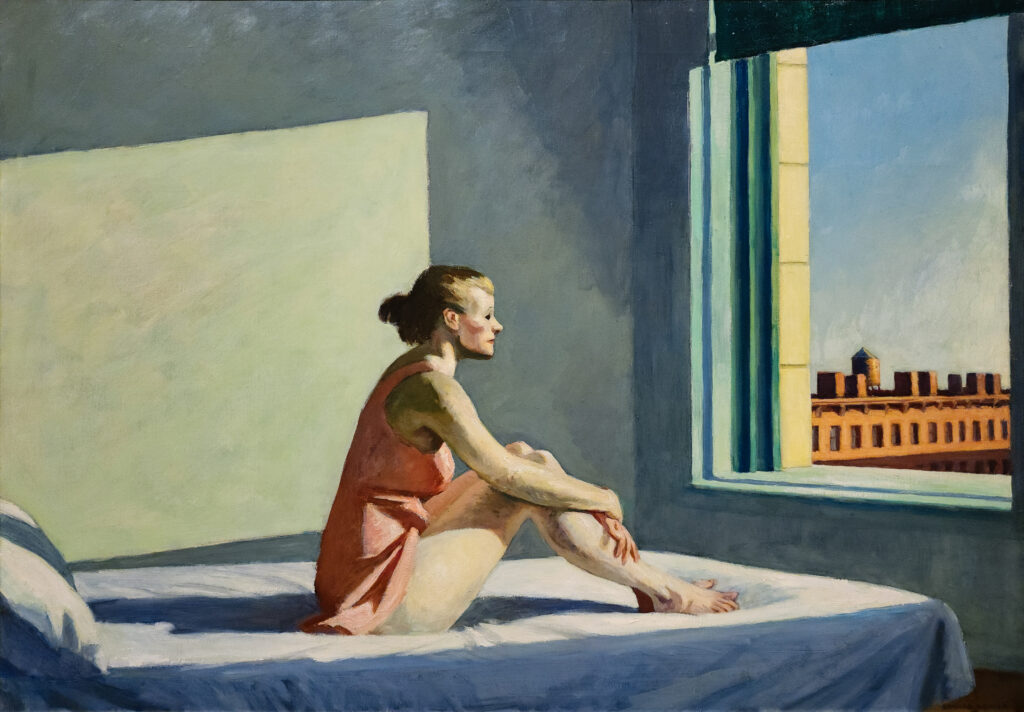
Office in a Small City – Edward Hopper / Metropolitan Museum of Art – https://www.metmuseum.org/toah/works-of-art/53.183/

The most obvious, the least cherished. That is, my reader, time. Such a concept. Abstract, yet too depressingly true-to-life. I have no idea why the first letter is about time and how much of it we just let go by. But it is a potent reminder of the easily forgotten.

As someone who drifts into anything, or as Seneca says, whose “[moments] glide beyond [his] reach”, I am someone who needs to take this one to the heart and learn it by heart. I do not want to re-preach the letter, but isn’t it so obvious that we just deprive ourselves of meaningful and cherished moments by not knowing and not recognizing what is in our own nature? What we are required to do?

I am someone, if you know me, who knows and speaks of sundry topics at ease and yet at no benefit to any. How much of this is required of me? Do I not, as Seneca says, let the whole of my life pass by with things not pertaining to the purpose? Such ridicule for me, especially when I preach the same to my students.

Turpissima iactura

Day 5 – Seneca, Letter XLI

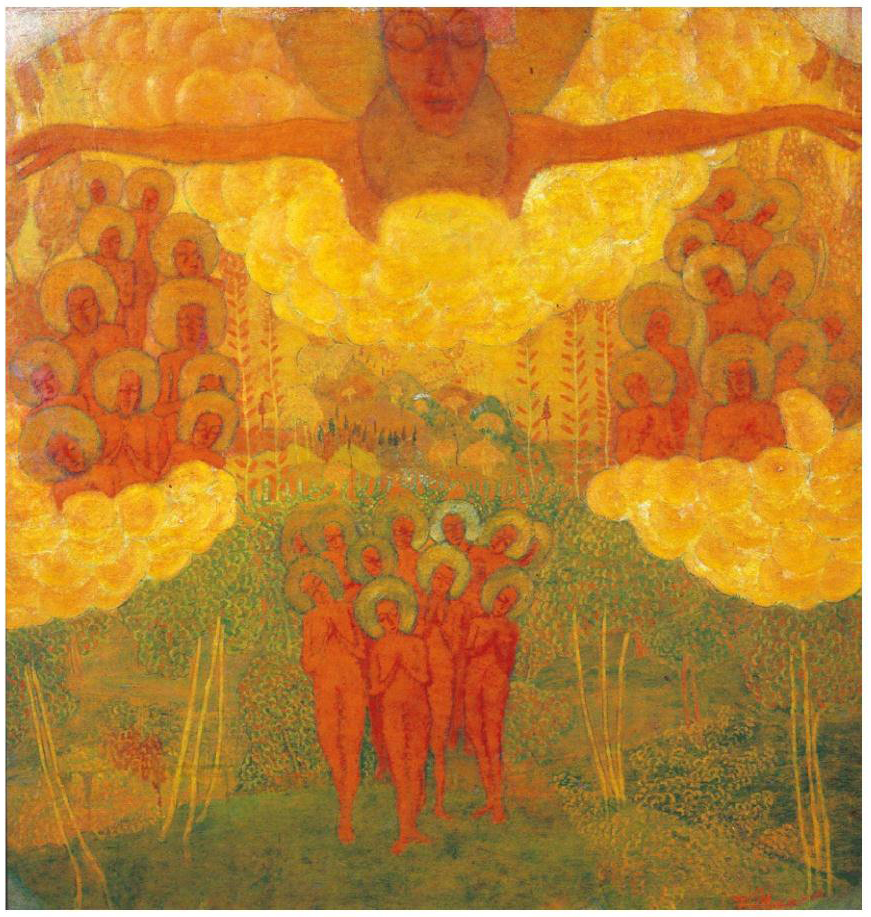
Triumph of Heaven (1907), Kazimir Malevich – Unknown source, Public Domain, https://commons.wikimedia.org/w/index.php?curid=72331196

On an irregular schedule, my reading of Stoic letters does not flinch. Letter XLI was yesterday’s reading but I gave it a second shot today. I felt I was rushing things just to keep up, but is there a need to keep up with an imaginary schedule?

This letter, when read for the first time, might sound quite exquisite to a modern reader because it deploys a very charged word, ‘God’ to explain Stoic ideas. Apart from the fact that the word god had different meanings in the letter’s own time, it might confuse the reader and derail their focus from the letter’s core message.

For Seneca, we are all born with the capacity to envision and live a life where all Stoic virtues are put into practice. To reach that point, he points out, we need to focus on what reason demands of us. When everything in outer nature takes its place as expected, we are struck with an awe of ‘divinity’, and when a virtuous person appears in our lives, we should not think that that person has come to possess these virtues ex nihilo, but rather worked their way toward these virtues through reason. Thus, Seneca maintains, in all of us lives a god.

If you aren’t familiar with Stoic thought, this might sound off-putting, but in simpler terms, Seneca summarizes that every human being is born equipped with faculties necessary to attain the virtues we all hold dear, and according to him, these faculties are ‘rays’ of a heavenly source.

Let me finish today’s reflection with this excerpt:

Tunc est consummatus homo, cum implevit quod natus est.

Seneca, Epistulae Morales 41.

Day 4 – Seneca, Letter XIII

This letter clearly shows how much modern psychotherapeutic thinking originates in Stoicism. It lays out, well, generic wellness info, mostly, really. Stoicism is pretty much proto-CBT.

If anything, this quote puts everything into perspective, that is a philosophical one:

Stultus semper incipit vivere.

Seneca, Epistulae morales, XIII

Day 3 – Seneca, Letter IX

1954.031

Well, well. I have chosen, in fact, a denser letter for today’s reading. The ninth epistle primarily questions how a wise person may remain content both with and without friends. This time, Seneca focuses on friendship (more deeply), gives explicit images found in day-to-day life. But I won’t peruse the whole letter and dissect every bit of philosophical data for my reflection.

I just want to mention the following lines: a Stoic approaches others for their company not because we are social creatures or because we want someone to come to our rescue in times of dire need, but because we approach companionship as we would naturally look at a verdant landscape as we drive by, enjoy the smell of spring blossoms, and listen to our favorite record. In fact, we all do so because we are human.

As a last note, Seneca says the following of lovers, drawing attention to their excesses:

… diceres furorem esse amicitiae.

Day 2 – Seneca, Letter III

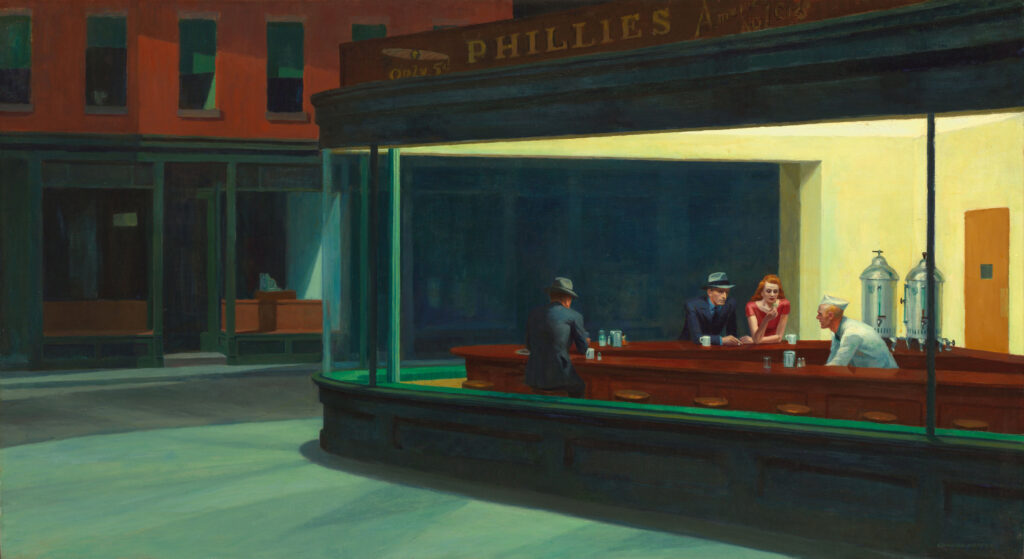
Edward Hopper, Nighthawks (1942).
Art Institute of Chicago. Public domain in the United States.

Life has been happening, and I have had my share of adult responsibilities lately. I moved into a new apartment, which prevented me from keeping up with this small project. Today, however, I have settled in: the carpets are laid, things are in order, and I have returned to my dearest Seneca.

In his third epistle, Seneca begins by pointing out an apparent absurdity in the behaviour of his correspondent. The man entrusts a ‘friend’ with delivering his letter to Seneca, yet cautions him not to share anything personal with this postman of a friend. Seneca then makes an interesting observation about how we use certain words merely as forms of address. Among these he places the word fellow. Addressing a stranger in the street as one’s fellow does not make the two truly companions (as rendered in Robin Campbell’s translation).

In much the same way, Seneca argues, we should only call someone a friend when we are confident in their character. He continues with further advice on friendship, but what struck me most was his insistence that one should behave in a friend’s presence as one would in one’s own company. Otherwise, the relationship cannot be considered genuine friendship.

This letter starts very easy as a read but builds up into a higher ground of philosophical inquisition and since I am writing only a reflection, this is all I will write for now.

Day 1 — Seneca, On Discursiveness in Reading

For the time leading up to April, I decided to read from prominent Stoics. Today, for my first day of this unruly marathon, I chose the second letter in Seneca’s Epistulae Morales. In this epistle, Seneca mentions the importance of steadiness in terms of any sort of intellectual consumption. He opines that one should not wander about in an imaginary garden of books and authors who blossom, and taste every nectar they offer.

The epistle gives sufficient and well-meant analogies: changing one’s medicine before it takes effect, moving a plant too many times before it can grow steadily. A traveler, Seneca reminds us, who travels frequently ends up having many acquaintances but no friends. I assume, here, that the core message —the underlying intent of the writer— is to discipline Lucilius’ eagerness to read many authors and to apply the same skill of steadiness in other parts of life: depth rather than dispersion.

For me, the following sentence in the Latin original of the epistle, summarizing his stance, is the most effective reminder of it:

Nusquam est qui ubique est

a food blog?

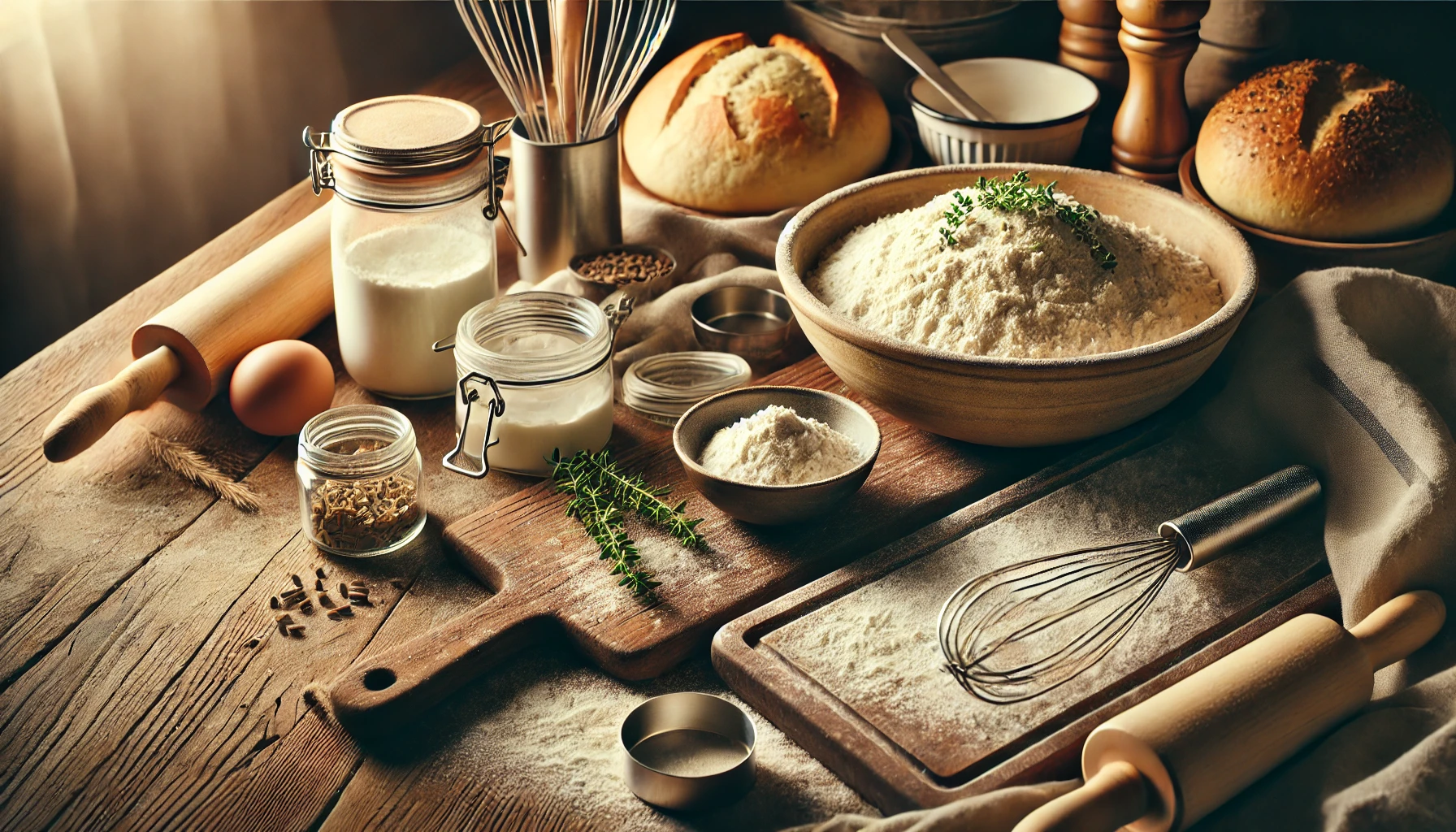
I love cooking for friends and family. I also love baking. Mostly because I love sharing my culinary creations with people. This was a side effect of the pandemic when I started my sourdough starter like many others on the internet. I also indulged in cooking channels on YouTube. Bon Appétit, America’s Test Kitchen among others. This gave me a head start in baking and cooking, experience as I cooked and baked a ton to my mom’s despise (jk, she was just not happy with the mess I made in her kitchen). So I realized I’m very into creating food! Most often, when I lived with my sister, I’d cook things she liked or things I liked cooking and she didn’t very eagerly eat. She did eat a great deal, she had to.

So, this whole thing comes down to one factor: I love making things to share with friends and loved ones. And food, being a stable on its own, is a great venue to share things in. Since I started living on my own some two years ago, I have only cooked healthy and experimental stuff at a minimum bare, because I didn’t have many people to share my creations with.

I did bake and cook a ton of food for my friends and colleagues but it’s not been the same as it once was when I was working from home. To not complicate things any further, I want to get into cooking and baking for real. Trying out recipes on ATK, Brad’s and Claire’s new YouTube channels. Maybe to this end, I should start a food blog? If there was a food blog, I’d document my progress (if any) and showcase the horrible doings in my kitchen. Maybe I could do one her eon this blog or on Instagram, with a new account dedicated to cooking and baking!

Fact of the matter is, I don’t even know if I have the time or dedication, but what would I lose if I only tried?

why can’t I stay motivated

This one bothers me a ton. I’m a very curious person, no wonder in that. I dig and dig and just dig even deeper at times and it all becomes too convoluted. Why make it so in the first place? Just download a to-do app and follow along a stupid lines of ticks. Or, maybe, a pomodoro timer app that has a cheap in-app purchase option, so that my lizard brain can feel good about it.

I’m either too focused on things totally uncalled for, or just lost, left in limbo. That’s my doing, of course. I can’t stay focussed or motivated on things that matter for me as a person. I wanna research a topic but end up reading random history or weird, niche grammar of a language that’s just not gonna provide for me, or seek my company. Feeling lonely. This bothers me a chunk much. If that makes sense. Why can’t I stay motivated? I mean, I want to. I try to. What’s the deal with me? Too many questions always get things going, like a good research article. But does it work for self-improvement? I mean, does anything work for it? What do we do? Or what should we not do? Is it something to undo or do further more and ahead? Maybe just stop with it, and carry on with what there is to do. I’m just too confused and it bother me a lot.

the urge to pen down

Way too often this urge emerges, and I fail to act on it. I don’t caress myself into writing but the urge only remains. It remains only so subtle that it will not vanish out of existence, nor will it make me act.

Writing does require hoards of research hours, countless readings and unsatisfied state of mind, which follows the two others gladly. But maybe, I should, only, act on the urge and let it emerge on, and on and let it take its course through me and find its rightful place where it is to reign with no interregnum of any sort, nor any opposition to it. Just write feels like a motto for the rest to follow and for the rest of my life.

Maybe I should just write.